

This piece won first place in the Open Institute's 2026 New Ethnographic Writing prize
Abstract
In this study I explore the everyday life-worlds of out-of-school children (OOSC) living and working in the Bagmati slum area of Kathmandu. The purpose of this research is to study how children who have dropped out of primary education navigate work, family responsibilities and social networks in an urban informal settlement. For this, I used qualitative research design with a new ethnographic method applied to integrate my short, intensive immersion into the lives of the participants with the use of participant- generated data. I gathered information through focused observations, informal conversations, rapid ethnographic interviews and digital artefacts such as photos and mobile messages. The findings reveal three eminent life-worlds: the world of survival labor for OOSC, the world of micro-solidarity among peers of similar circumstances, and the world of fragmented aspirations. Through this study, I realized that children remaining out of school is not a single, isolated event but a series of negotiations mapped under the influence of poverty, migration, unforeseen family crises and local cultural norms. The use of new ethnography has helped capture the fluid and hidden aspects of children’s daily lived experiences that traditional long-term ethnography might overlook.
Keywords: Dropout, Urban informal settlements, New Ethnography
Meeting the Children behind the Numbers
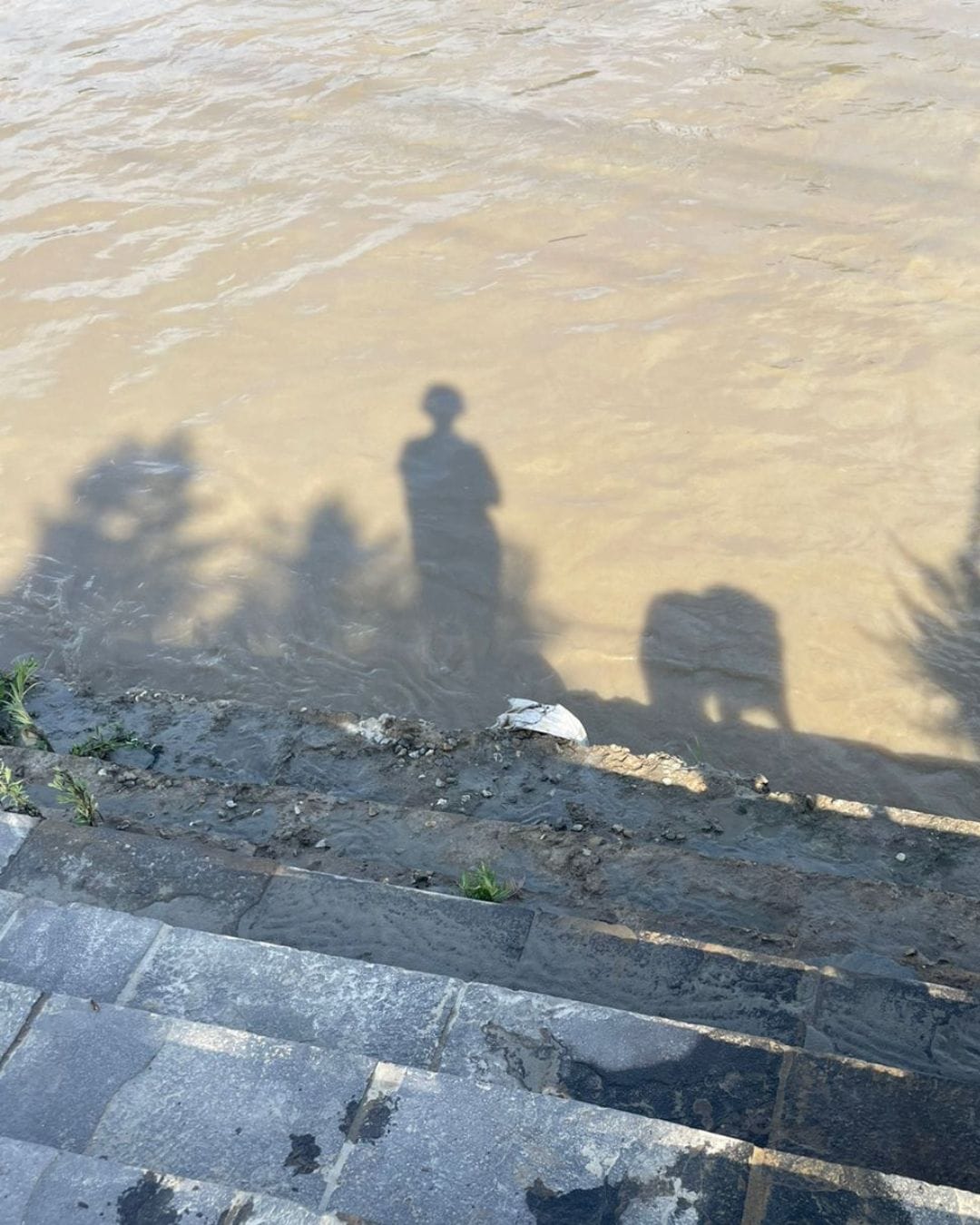
Early in the morning as the sun rises over the humdrum of Kathmandu, the Bagmati river glitters briefly- before the rush of city life dulls its shimmer. Along its banks, basking in the horrid stench of the river, is the cramped settlement built from tin sheets, tarpaulin, and wooden scraps, where children begin their day long before most school bells ring. Some tie rags around their hands before heading to the junkyard for their duty while others hurry to tea shops to tackle small towers of unwashed dishes from the night before.
For many of these children, their childhood did not stretch into school years, and their school uniforms, once their pride and joy, have now become their work dresses. These are the out-of-school children (OOSC) of the Bagmati slum area- children who have not attained primary education not because they lacked the ability, but because their life had other priorities. Their worlds unfold in narrow alleyways, scrap markets, local eateries, riverside dumping sites, and makeshift homes built on precarious land.
When I first saw these children several years ago- clothes dusty, hair messy, their laughter echoing across the settlement, I found myself quietly wondering what they dreamed of becoming when they grew up- or perhaps they didn’t dream at all. That question has lingered with me all these years, growing sharper as I learned more about the lived realities of these children. While such cases of children being out of school is neither new nor unique to Nepal, its local context- that which is defined by the emotions, routines and lived experiences of these out of school children is largely under-explored.
According to UNESCO (2023) the dropout rates among marginalized communities in urban Nepal is still very high, and it is particularly evident where migration, poverty and precarious livelihoods intersect. Quantitative data, which is essential for policy, often limits these experiences into numerical trends, hiding the lived realities behind tidy categories such as “dropout,” “child labor,” or “educational exclusion”. Life inside these informal settlements, however, does not move in a straight line and is not defined by such neat indicators.
Ethnographers argue that to understand children’s lives, especially in marginalized contexts, we need methods that allow us to see from inside their worlds—methods that follow them through time, space, and relationship (Emerson, Fretz, & Shaw, 2011). To explore the lived realities of these children of the Bagmati river, I decided to adopt a new ethnographic method using tools such as participant observation and child-centered storytelling. Using these tools, I was able to get some idea about what it meant to live in the slums, to be working harsh hours when all your peers are learning in schools.
Initially, when I started this research with the intention of understanding the experiences of OOSC, I believed I would get more information from the parents than from the children. It was only later when I interacted with the children that I realized that children are not passive victims of poverty but active agents who interpret and reshape their reality in their own ways (Mateos-Blanco et al., 2022). I was able to see such agency of children in the slum area in subtle forms: a boy who created his own “safe route” to avoid police patrolling areas; a girl who saved a small portion of her daily earnings to someday buy a school bag for when she could go back to school; a group of friends who took turns guarding each other’s scrap sacks from older boys.
These micro-actions form the fabric of their life worlds—worlds rarely considered in mainstream educational planning.
While conducting this study, I did not wish to simply document reasons why children drop out, I hoped to understand what these children’s days look like, how they make sense of their work, what they aspire to be one day, and how they experience belonging or exclusion. I adopted this immersive ethnographic approach to bridge the gap between policy discourse and lived realities, and to offer a grounded portrayal of out-of-school childhoods in one of Kathmandu’s most overlooked urban spaces.
Exploring Childhoods in Precarity
Many summers ago, during warm, breezy evenings, I used to sit by the edge of the Bagmati river near UN Park looking at the Bagmati slum area watching life slowly dissipate into shabby, makeshift houses. I would listen to the gentle gurgle of the river mingle with children’s laughter and people’s murmurs, wondering how such fragile moments of joy could survive amid so much uncertainty. I still remember watching one boy, no more than eight or nine, expertly balancing a stack of unsold plastic utensils on his head as he walked home with his friends, joking and sharing a packet of noodles. It was at that moment that I realized that whatever I thought I knew from reports or statistics about these children was only a faint outline of something far more intricate.
I later turned to existing research for my masters’ thesis to understand the barriers to education that kept children out of school. It was at that moment I began to actually relate these children’s lives with literature, and I was baffled to see how deep the issue of OOSC ran. A report I reviewed by UNESCO (2023) was particularly glaring as it showed that children raised in the context of poverty and displacement face the highest risk of school exclusion. Later I came across UNICEF (2023)’s report which stated that there are over 31.8 million children (8.2 million of primary school age and 23.6 million of secondary school age) in South Asia where urban poverty causes the push-pull effect- pushing children out of school and pulling them into child labor. This push-pull theory of schooling and labor became the first theoretical frame for my present research.
Studies referenced above by UNESCO and UNICEF have identified structural barriers such as poverty, parental illiteracy, insecure housing arrangements and poor quality schooling that cause children to drop out of schools. I found similar patterns in Nepal’s context as well, where the prevalence of poverty, unstable income streams and migration causes children to drop out of primary schools. I went through reports by the World Bank (2020) that show that for many urban poor households in Nepal, school-related indirect costs (such as uniforms, stationery, and transportation) can be prohibitive despite free primary education. Most of these children who drop out of school enter into early labor markets. What worried me immensely was a data by ILO (2022) that showed that child labor rates in Nepal is one of the highest in South Asia with nearly 34% children between ages 5 to 17 being engaged in some form of paid work. This was further backed by arguments by scholars such as Magammana et al. (2025) that argue that child labor is directly related to urban informal economies which is why children are unable to stop working even when they are provided easy access to education.
While earlier literature showed working children as vulnerable victims of our system with limited agency of their own, contemporary childhood studies challenge these one-dimensional narratives. For example, Prout (2005) and Deng et al. (2021) argue that children must be understood as social actors who actively experience and interpret their experience, and reshape their responses based on their interpretations. Although slightly outdated, an early report by Liebel (2004) talks about how such children often express pride, responsibility, and competence through their work especially in marginalized communities where economic contribution to the family marks the child as “man”. Such ideas, as well as ethnographic studies conducted in developing countries like India, Bangladesh, Pakistan and Nepal show how child labor is not merely exploitation but a familial obligation and sometimes even community norm. In order to understand the lives of these children and the barriers to education they experience that keeps them out of school despite having the opportunity to enroll into one, it is necessary to dive deeper into their lives. Theories of child agency form the second theoretical frame for my study where I view my participants- out of school children of the Bagmati slums- as competent social actors and co-creators in my study.
One tool that has long been recognized to do this is ethnographic study. Geertz’s (1973) concept of “thick description” emphasizes capturing the meaning behind behaviors, not just the behaviors themselves. Today these methodologies include participatory tools, visual methods, child-led mapping and micro-interaction recording which has helped direct our attention towards viewing children as co-researchers rather than mere research subjects. Globally, there have been many studies using this tool to immerse into the lives of OOSC, yet, in Nepal, we still lean heavily towards quantitative study of barriers to education which has led to a significant gap in our understanding and interpretation of these children’s lived realities. Through my present study, I hope to use this very tool to understand these children’s daily experiences in Bagmati’s slum areas.
Constructing the Ethnographic Lens
I began this study with a very rough idea of how I would go about collecting information. While I knew I would be taking the ethnographic route, as an outsider to the Bagmati slum area with only basic training in academic research, I realized that conducting interviews and actively observing would not be enough. Most of the time, the children were largely open and curious, whereas the parents, in whose active presence and consent I gathered my information, assumed I was from some government or non-government agency and were reserved. After several days of active immersion, drinking tea with the families, offering home-made meals, spending hours with them and reflectively preparing my notes everyday I was able to see and feel their rhythm. Only then did my ethnographic effort slowly take shape.
I drew my inspiration for using this approach from Black et al. (2022) who argue that ethnographic approaches are powerful tools to explore complex and adaptive social environments. Over the course of the next few months, I visited the slum area during different times of the day to see how the children’s mornings where they helped with household chores differ from their evenings where few found time to play along the riverbanks.
To gather required information, I combined participant observation, informal conversations and child-centered storytelling sessions. My research participants, who I prefer to call co-researchers, were 8 out of school children born and living in the Bagmati slum areas between the ages of 6 to 15 years. During my first rapport building sessions, most children were wary of my presence, and they were unsure of why I was watching them and interacting with them. Eventually, they began to trust me and started sharing their stories talking about their routines, showing me their work places, introducing me to their friends, sharing games and sometimes, even their snacks. In three cases, I also interacted with the parents informally to better understand the broader structural barriers that caused the children to stay out of school.
I collected informed consent for all the conversations, and while I did not get the consent to record voices and videos, I collected field notes and memos where I noted what was said, and what was not said (expressions, hesitations, implied meanings). I paid special attention to the context and social interactions. Later, I coded these notes to identify recurring themes, and I allowed children’s voices to guide my analysis. Throughout my study, I have maintained anonymity and remained sensitive to the risks associated with discussing labor challenges. I remained reflexive throughout the process by constantly examining how my presence can affect and shape interactions, and how my interpretations can honor or distort the children’s lived realities. As a result of my efforts, I was able to portray my co-researchers not as passive victims of poverty and exclusion but active participants of their own lived realities, shaping and negotiating their environment even amid barriers.
Looking at the Lives Lived between Work and Play
As I moved week after week through the dusty, often muddy and always stinky lanes of the settlement, I was worried about ruining yet again another sturdy pair of shoes. The relentless splashes of mud across my otherwise well washed pants, and the prospect of returning home to another pile of laundry made me rethink my life choices. And then I would look at the children running about barefoot in the mud, sometimes chasing a rooster, other times being chased by one, and it made me realize how absurd my concerns were, and how shallow my worries. From far away, I only ever saw the poverty of these settlements, but when I stepped into one I realized how genuine the smile of these children were, and how carefree they looked at this very moment, as they ran for their lives from the annoyed little rooster, as they eagerly waited for their evening snacks being prepared by the mothers after a long day of labor. And every co-researcher I visited insisted I have a share of their snacks, or at least a cup of tea. These children clearly lived very full lives even outside of school, even when they were excluded from the category of what a “normal” childhood should look like.
After almost three months of active immersion, observation and interaction, I realized that there were three overlapping life-worlds common across my co-researchers. These life-worlds unfolded not at once, but in parts and through weeks after weeks of getting to know one another and shadowing these children as they lived about their lives at work.
The World of Survival Labor
The first world these children led me into was shaped by work, where small hands performed big, exhausting tasks for small sums of money. I saw, day after day, how life began at day break, before the rooster even crowed, as plastic collectors crowded the riverbanks, young boys pulled handcarts heavier than themselves with practiced ease, girls went about with their household chores and babysat their siblings as their parents left for their daily-wage jobs, and some toddlers strode with their parents to construction sites since they did not have anyone to watch over them. What was daily life for them was almost out of this world for me.
One morning I helped Ram, a 15 year old who had dropped out of Grade 2, load utensils into his cart that he would take to sell throughout the town. We fell into conversation and I asked him if he missed school. “I miss school more than anything, and if my brother had not fallen ill back then, I would never have agreed to drop out of school. But my brother is still recovering and needs regular treatment, so I don’t even have the heart to tell my parents to send me back to school. Besides, my family depends of my wages. I cannot disappoint them and be selfish.” When I asked if he would return to school if his brother got better, he just shrugged and said “What even is the point now? I am already this big, there is no way I am sitting with kids in Grade 3. Everyone will laugh at me. I will just keep earning money for my family as long as I can.” His words, very hopeless, reminded me of studies that emphasize how for children in urban poverty, school is not abandoned out of disinterest but out of urgent economics of survival.
Survival labor is not just an educational barrier, it is a persistent ecosystem, in a sense that the informal economy of the settlement area depends on child labor in subtle ways- from recycling networks to street vending to household support work. Child labor in these settlements are often normalized because they are considered indispensable to a family’s survival. Hari (12 year old, never attended school) mentioned in one of our conversation that his father was very proud the day his handed him his first earning. “I will never forget how proud baba looked when he took that money and he said I have now become a man. That was the best day of my life.”
The World of Micro-Solidarity
When I visit my relatives who have school-going children, their persistent complaint is that their children never have anyone to play with at home, and they end up spending hours watching TV or playing video games or doomscrolling through social media. In stark contrast to that, I encountered a quiet and soft second world amidst the chaos of the settlement- one built through friendships, alliances and small acts of care. In the narrow alleys of the makeshift houses, I saw children sharing leftover food, warning each other about police patrols and dangerous routes. I saw how these networks of “micro-solidarity” worked as both emotional and practical lifelines, especially for children whose parents spent long hours at work.
In one such house that always had a cold draft coming from some hidden hole I met Laxmi, a 9 year old whose parents work at a nearby construction site and come home late in the evening. Her brothers both go to school, but she is left at home to cook, clean, do the laundry and tend to their tiny kitchen garden. When I asked her about her friends, her face instantly lit up.
She described how she spends a lot more time with her friends than with her parents and sibling, and how she feels very safe knowing they are around, even in the evenings when she is all alone at home. Perhaps it was a coincidence that her friends Puja and Rama visited her house as we were talking, so I bought few packets of waiwai and vegetables and we all cooked a pleasant pot of fried noodles. Her parents, baffled by my Indian way of preparing noodles that I learnt from somebody’s tiktok, said they felt secure leaving Laxmi home alone because of her friends’ presence.
These solidarities, though fragile, not only helped children navigate risks, but also fight loneliness and the instability of life in a slum settlement. They also actively shaped these children’s identities, and in this world, their agency was quiet but unmistakable.
The World of Fragmented Aspirations
The third world was rather difficult to grasp, and most of the time when I tried to dig through this subject, I would get vague responses from the children. Most of them had not really thought far into the future- their main concern was with the present and they mostly talked about eating delicious food if they had the money, or earning more money through work to build stronger, better, stable houses for their family- one that would not be at the risk of being wiped out by the river during the monsoon and where people wouldn’t want them to get out of. Yet, I did find bits and pieces of their aspirations in what they only implied, such as when Rama said she really admired her primary school Nepali teacher and once hoped to be just like her, but she now wants to be a housewife and cook delicious food for her family. Ramesh, her brother,
happily said he would one day enroll into school again and someday work in a big office, but then he would withdraw into silence moments later looking at his sister with a guilty expression. When I pressed him to talk more about working in a big office, he evaded the question completely and ran off to play with something. Those were the small moments where I felt that aspirations in these slums were not completely absent, they were scattered, interrupted and even overshadowed by the pressure of immediate survival. Research shows that in contexts of extreme urban poverty, children’s aspirations frequently fracture under the weight of instability, unpredictable crises, and the normalization of short-term survival thinking (UNESCO, 2023).
In one of my visits, I saw 16 year old Sabin teaching his sister to make a paper plane and fly it. They were utterly engrossed in the origami and did not notice me watching them play.
They finally noticed me when one of the planes landed at my feet, and Sabin immediately became alert and slightly hesitant. Before I could say anything, he looked at me with a shy expression and said he was just messing around with his sister before heading to work. I teased him with jest and said I would love it if he taught me how to make a paper plane too, and he looked pleasantly surprised. As we built the planes together, with me making an absolute mess and Sabin teaching me with the same patience he showed his sister moments ago, we talked about real airplanes and how awesome it would be to fly one, or even just sit in one. That’s when he said he had once dreamed of becoming a pilot. But his mother left him when he was just 10 and ran off with some driver leaving him and his sister behind. His father had previously migrated to India to earn more money, and he visited only once in a while. Now they were living with his grandparents, and he had to take responsibility of his sister. His eyes looked very sad and helpless as he wondered if his father probably had another family in India which was why he rarely visited them, and sent money only once in a while. For Sabin, and many children just like him, imagining a future beyond daily struggles seemed like an indulgence and an emotional risk they were not willing to take. Their world allowed hope only in small, flickering moments.
At the end of my field visits, as I reviewed the detailed notes I had taken, I realized that a golden thread ran across all three life-worlds: children remaining out of school was never a single, isolated event. Instead, it was heavily influenced by ongoing negotiations between family loyalty and personal aspirations, between hunger and hope. When viewed as a single event, we barely see the problem: children are not attending school, and we formulate solutions accordingly: better access to education. Many children I talked to had enrolled in school at least once. Some had attended only for few months, while others had completed several years. But each time, the forces pulling them out (such as migration, sudden illness in the family, family circumstances, unsafe housing, or the need to care for younger siblings) were stronger than the ones pulling them in (free basic education, access, mid-day meals). Research conducted by Thadathil & Basnet (2023) as well as studies by Hasan & Chaitee (2022) describe students dropping out not as a single moment but as an ongoing negotiation shaped by household crises, mobility, parental precarity, and urban marginalization.
Throughout this ongoing process, children were not passive receivers. Instead, they actively made micro-decisions about when to work, whom to trust, how to stay safe and when/ if school could fit into their world. The several months I spent at the field affirmed the claims that new childhood studies make about how children actively interpret and reshape their environments even through severe constraints. I realized that these children were not mere “dropouts”, they were active decision-makers who navigated complex realities far beyond their years and anyone’s imagination.
Interpreting the Layers of Lived Experiences
It was my last day of research as I sat by one of the benches near the settlement looking at a group of children huddled together sharing leftover roti and kulfi. They had just returned from work, it seemed, for their feet were dusty and their clothes were worn and slightly damp from sweat. They were deeply engrossed in conversation, loud and chaotic, and their sudden burst of laughter yet again rang through the settlement. Beyond the Bagmati river, I could see some trees peeking from the UN Park, and I reflected on how I sat there, right beside those trees long, long ago, listening to the sounds of children’s laughter echo, looking at this very settlement wondering how horrible life must be here. Today, as I sat by the settlement listening to their loud conversation and contagious laughter, I felt the quiet contradiction of my assumption- I felt the waves of incredible resilience existing alongside deep, structural vulnerability.
This ethnographic study challenged me to see beyond statistics and look at the faces and lived realities behind the numbers. Studies conducted by UNESCO (2023) and UNICEF ROSA (2023) warn us that systems often reduce complex childhood experiences into mere administrative checkboxes while obscuring the lived realities behind them. The lives I saw at the Bagmati slum brought this idea into life for me.
Children being out of school is not a single event but a process of negotiation
Information I gathered from my co-researchers- children of the Bagmati river- show that leaving school was never a single decision influenced by just one factor such as economic constraints. Instead, it was a slow accumulation of pressures such as family illness, abandonment, inconsistent income, child care. For girls, household responsibilities were an added burden. Many children in this study had entered and exited school multiple times, mirroring the “circular dropout” trend identified in newer studies of urban poor communities.
Children’s agency within constrained spaces
At the start of my research, I believed that children simply passively receive what their parents hand them- be it hardship or love. But one thing this study has clearly shown me is that although children do not have unrestricted freedom and ability to make decisions, they still exercise what scholars call “bounded agency” (Pohl, 2024). The children in Bagmati slums also exercised choices within the limits of poverty, deprivation and informal labor markets. They negotiated work schedules, protected younger siblings, formed micro-solidarity groups, and recreated small spaces of joy within hardship. Clearly, the traditional way of viewing children as helpless victims is incorrect, and we must see them as active interpreters and agents of their circumstances. Any intervention aimed at these children that ignores their agency could misunderstand both their needs and their strengths.
Schooling That Does Not Fit Survival-Based Childhoods
Another important factor I noticed while actively observing the children’s lives was the mismatch between formal schooling and the daily rhythm of slum life. While schools in Kathmandu (and perhaps the whole of Nepal) operate around the expectation of regular attendance, some level of parental engagement, homework routines and stability of some form, life in the slum areas does not facilitate those expectations. This means that traditional models of schools are structurally incompatible with children living in urban poverty (UNESCO, 2023). For children whose days depend on unpredictable work, sudden displacement, or unstable family conditions, schooling becomes an unattainable routine. The implication is clear: schools must adapt to children—not the other way around.
The Intertwined Nature of Child Labor and Urban Informality
Most families I talked to over the course of several months required their children to work, not just for an extra source of income, but for the survival of the family. Their livelihoods are insecure, and they are always on the verge of displacement by various internal and external factors including lack of adequate wage-jobs, weather related risks, government related risks etc. Child labor is structurally tied to informal urban economy (IDS, 2024) and so, pulling children out of the labor market without addressing household poverty only creates a cycle where re-entry of children into work becomes inevitable. This means eliminating child labor required both educational interventions and broader economic support such as cash transfers, rental support, food security programs etc.
Peer Solidarity as a Hidden Strength
One discovery that I found both insightful and that warmed my heart was the bonds of friendships these children had formed through similar life circumstances. Although I saw some children falling into bad habits due to the friends they associated with, such as smoking at an early age, most children usually looked out for one another, shared their food, tried to keep one another safe and helped care for each other’s siblings. These micro-solidarities are rarely recognized in policy framework, however, I believe programs designed for OOSC can benefit by building on these natural support structures by incorporating peer mentors, group-based learning circles, and community learning hubs.
While musing and interpreting the multiple layers of these children’s lived realities, memories of all the visits I made to the settlement flooded my mind and I understood clearly that no policy can succeed unless it honors the everyday negotiations that shape a child’s chance to learn. There were moments during the field work when I acutely felt aware of how much I was allowed to see, and just how much remained outside my reach. While my co-researchers let me peek into fragments of their days, I could never really capture the full arc of their lives. I was an outsider with a task at hand and a sheltered life behind me. And so, I may have softened certain truths or amplified others. Trust takes time, and although I spent many hours walking through the alleys and riverbank, I could not make my fieldwork stretch long enough to follow each child’s life. In this study, I dived into the lives of a small group of children, and their experiences cannot be assumed to represent all OOSC’s stories. I can only hope that my effort in conducting this study offers a meaningful starting point for understanding a world that statistics overlook.
Turning Back to Look Forward
During the course of my visits to the Bagmati settlement, I grew to enjoy standing near the bridge watching the river flow by steadily, muddily. My olfactory nerves were thoroughly desensitized to the stench that once bothered me, and even the swift breeze felt refreshing as it hit my face. As the afternoon light fell softly on the tin roofs, children would run past me kicking empty bottles that bounced unevenly across the dusty ground. When I look back to those evenings today, I realize that the story of out-of-school children is not a story of absence, as official reports often suggest. Instead, it is a story of presence- of presence in labor, in care, in struggle, in camaraderie, and in small acts of joy.
Through this study, I had set out to understand the life-worlds of children who had left school, but I realized something deeper: leaving school was never the beginning or the end. It was a thread that was woven into larger patterns of poverty, crisis, fragile income and family lives, and cultural expectations. These children carried dreams that flickered on and off like the evening bulbs in their settlement. Their stories reveal not just what pushes them out of school, but what keeps them human in a world that sees them mostly through statistics. An ethnographic approach allowed me to listen to what was left unsaid, to see the pauses and hesitations and to witness the courage each of these children carries. I realized that education reforms cannot be built solely on numbers and “one-size-fits-all” models. They must be built on the emotional truths of children’s lives. To bring these vulnerable children back to school, we must begin by acknowledging the realities that unfold outside school gates.
References
Black, G. B., van Os, S., Machen, S., & Fulop, N. J. (2022). Ethnographic research as an evolving method for supporting healthcare improvement skills: A scoping review. BMC Medical Research Methodology, 21, Article 274. https://doi.org/10.1186/s12874-021-01466-9
Deng, Z., Xing, J., Katz, I., & Li, B. (2021). Children’s behavioral agency within families in the context of migration: A systematic review. Adolescent Research Review, 7(1), 1–61. https://doi.org/10.1007/s40894-021-00175-0
Emerson, R. M., Fretz, R. I., & Shaw, L. L. (2011). Writing ethnographic fieldnotes (2nd ed.). University of Chicago Press.
Geertz, C. (1973). Thick description: Toward an interpretive theory of culture. In The interpretation of cultures: Selected essays (pp. 3–30). Basic Books.
Hasan, M. J., & Chaitee, N. N. (2022). Reasons behind the drop out of street children from non-formal primary education program. International Journal for Educational and Vocational Studies, 4(2), 81–88. https://doi.org/10.29103/ijevs.v0i0.5612
IDS. (2023). Policy analysis of child labour in Nepal (CLARISSA Policy Analysis 1). Institute of Development Studies. https://doi.org/10.19088/CLARISSA.2023.006
International Labour Organization (ILO). (2022). Child labour in Nepal: Status report and statistical update. International Labour Organization.
Liebel, M. (2004). A will of their own: Cross-cultural perspectives on working children. Zed Books.
Magammana, T., Muthugala, H., Bandara, A., et al. (2025). Breaking the cycle: Long-term socio-economic determinants of child labour in SAARC countries. BMC Public Health, 25, 4040. https://doi.org/10.1186/s12889-025-25399-w
Mateos-Blanco, T., Carrasco, V., & López, G. (2022). Children’s agency in contexts of poverty: Rethinking participation in research. Childhood, 29(4), 516–532. https://doi.org/10.17645/si.v10i2.4921
Pohl, C. (2024). Violence and agency in children’s narratives. International Journal on Child Maltreatment: Research, Policy and Practice. Advance online publication. https://doi.org/10.1007/s42448-024-00216-w
Prout, A. (2005). The future of childhood. In The future of childhood (pp. 1–17). Routledge. UNESCO. (2023). Out-of-school children and barriers to education in urban South Asia. United
Nations Educational, Scientific and Cultural Organization.
UNICEF. (2023). South Asia regional report on out-of-school children: Education, poverty, and child labour. United Nations Children’s Fund.
UNICEF Regional Office for South Asia (ROSA). (2023). Dropping out as a process: Understanding the pathways and precarity of urban poor children. UNICEF ROSA.
World Bank. (2020). Education finance and household costs in Nepal: A policy analysis. World Bank Publications.
Member discussion